



 Donate
Test your knowledge about Overlay & Stroma
Time to evaluate yourself! Pass a quick quiz on recognizing overlay/stroma, why it happens, and how to deal with it.
Learning resources to pass this quiz: Psilocybe growing problems - overlay, abortions, etc
Shroomok's choice on Amazon
Organic Garden Lime Calcium Carbonate, 5...
Garden Gypsum Fertilizer, 6-Pound
Peltier Cooler Semiconductor Refrigerati...
Food Coloring Set
3-in-1: CO2, Temperature, Humidity, Tabl...
ANZESER Magnetic Stirrer Hot Plate, 100-...
Isopropyl Alcohol 70% + Spray bottle
Digital Air Quality Monitor - Temperatur...
Heating Film
Lion's Mane Extract
Pasteurized Mushroom Substrate - Cow Man...
Mushroom Supplies, Grow Kit in-a-Bag, Al...
Questions covered in this Quiz
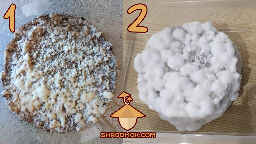
Contamination or Not? - Is overlay/stroma considered contamination?
Possible answers:
- Not contamination; it indicates pinhead initiation conditions weren’t met or genetic changes
- Not contamination itself, but it's сause later on
- Yes, it's bacterial contamination that starts with crust-like layer and metabolites
- Not contamination; a harmless cosmetic changes, required phase before every pin setting
Mycelium type & overlay - What type of mycelium is prone to overlay?
Possible answers:
- Tomentose – airy, fluffy, cottony, puffy mycelium
- Rhizomorphic – rope-like, thread-like or root-like mycelium
- Mycelium type doesn't matter at all
- Mycelium from multi spore syringe (MSS)
Overlay vs Stroma - Is there any difference between Overlay and Stroma?
Possible answers:
- Visually they look alike. The difference in their causes: overlay caused by improper fruiting conditions, stroma – by genetic changes and may not be “fixable” at fruiting stage
- They look different. Overlay forms crust-like layer, stroma – cottony puffy mycelium growth
- Overlay and stroma are completely unrelated and never look similar
- Overlay is always harmless; stroma is always lethal
Case study - Is it overlay?
Possible answers:
- Yes, this is the beginning of the overlay, but it can be fixed
- No, it's fine, just normal mycelium growth
- Yes, this is already an overlay, it's impossible to fix it
- No, it's Cobweb Mold contamination
Late overlay - What can overlay turn into if neglected?
Possible answers:
- A dense, dry crust that blocks air and moisture exchange on the surface
- A protective skin that increases the amount of pins
- A layer that protects the substrate underneath
- A harmless layer on top that promotes side pinning
Causes of Overlay - Which situation commonly contributes to overlay forming on a top layer?
Possible answers:
- Providing fruiting conditions too late (prolonged colonization period)
- Too little light during bulk colonization period
- A casing layer that stays evenly moist without pooling
- A long period of imbalanced fruiting conditions (e.g., stale air, high CO₂, poor evaporation, or “off” humidity/temperature)
- Brief daily temperature fluctuations
- Water pools after drying forms the crust-like mycelium
Overlay in grain spawn - Overlay can appear even in a spawn jar/bag. What’s the key point there?
Possible answers:
- It can happen with prolonged colonization; it’s not necessarily fatal at that stage if the spawn is otherwise healthy
- It means the culture is permanently ruined and must be discarded immediately
- It proves the spawn is bacterial contaminated
- It only happens if the grain is over-hydrated
Repeated overlay - Which substrate/chemistry factor is highlighted as a possible driver of repeated overlay?
Possible answers:
- High sodium/salinity and generally “unfriendly” substrate chemistry can stress mycelium
- Excessive calcium in gypsum always triggers overlay
- Too much protein in grain
- Too high pH (over 7.5) of the bulk/casing substrate
Overlay treatment - What to do, if you see early overlay?
Possible answers:
- Adjust fruiting conditions (surface moisture balance + evaporation, FAE, temperature, humidity)
- Immediately add a rich nutrient layer to “power through” pinning
- Seal the chamber airtight to stop drying
- Spray cold water directly on mycelium to “reset” growth
- Fork tek and add a non-nutrient true casing or pseudo casing layer
Case study - This is P.Ochraceocentrata (formely Natalensis) mycelium and zero pins on the cake. What can you do with this thick (1.5cm or ~1/2 inch) overlay?
Possible answers:
- I'd harvested it (scrape it off) and dry it. It's safe to use it as dried mushrooms
- I'd scrape it off and toss. Mycelium overlay should not be used
Case study - What are the most likely causes of overlay on this grow kit cake?
Possible answers:
- Spraying water on the mycelium directly or water pools/drops on mycelium. After drying mat-like layer appeared
- Poor fresh air exchange and high CO2 promote such flat mat-like layer
- The cake is fine, no signs of overlay here
- Low humidity + excessive evaporation + dry top layer
Case study - Does this all-in-one grow has overlay?
Possible answers:
- No, it’s NOT overlay. That's how normal mycelium look
- Yes, the cottony fluffy areas is the beginning of overlay
Case study - 11 days since providing fruiting conditions. Overlay?
Possible answers:
- Yes, it's overlay – dense fluffy cottony clouds and zero pins
- No, it’s NOT overlay – just normal (tomentose) mycelium growth
Read this article Psilocybe growing problems - overlay, abortions, etc to pass Quiz successfully