



 Donate
More contamination than anything else
Hi, my name is Ron. I’m new to mushroom growing. Currently, I have some Reishi and Lion’s Mane mushrooms, but I think I have some contamination in both mushroom cultures. I inoculated some sterilized maize grain spawn 3 months ago.
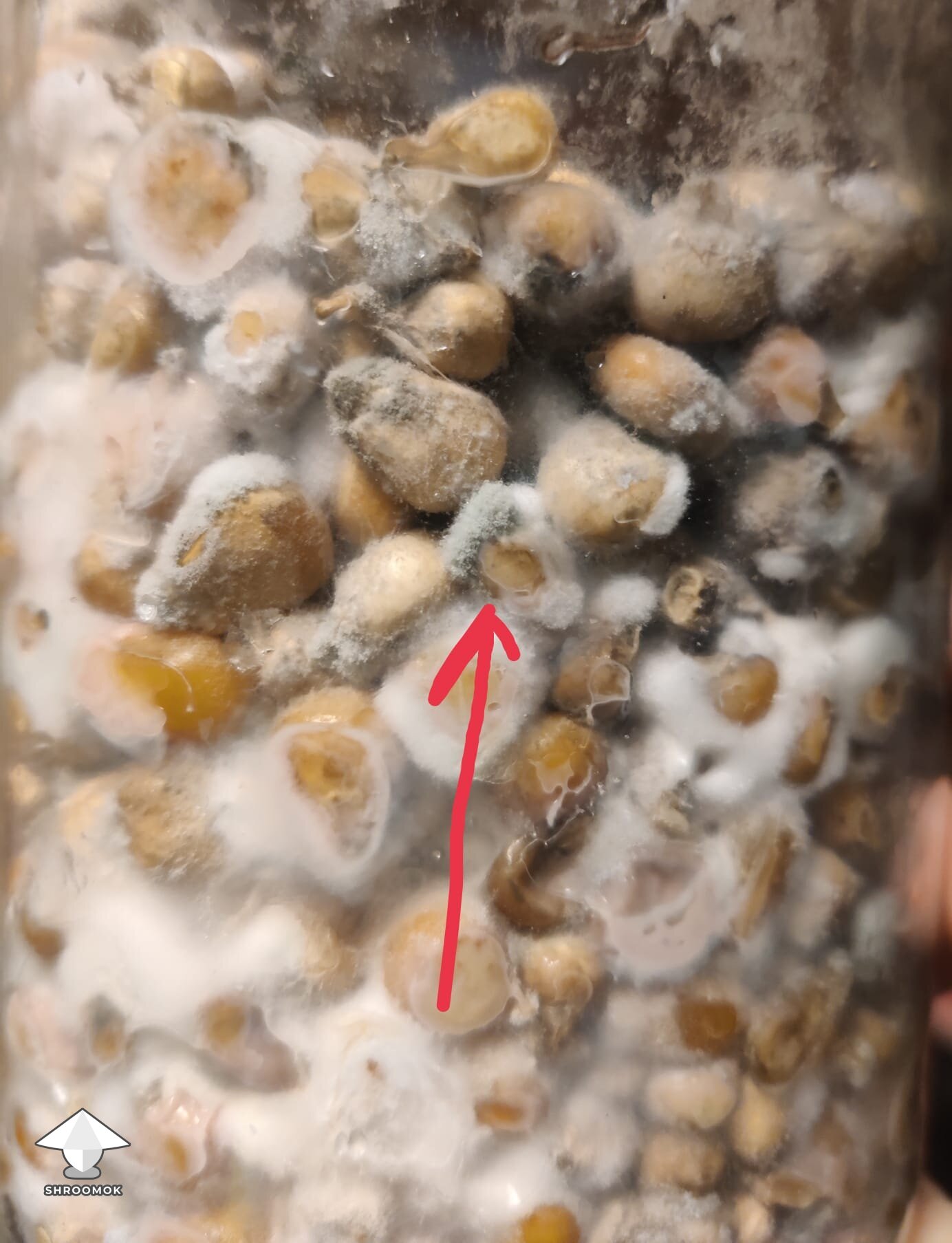
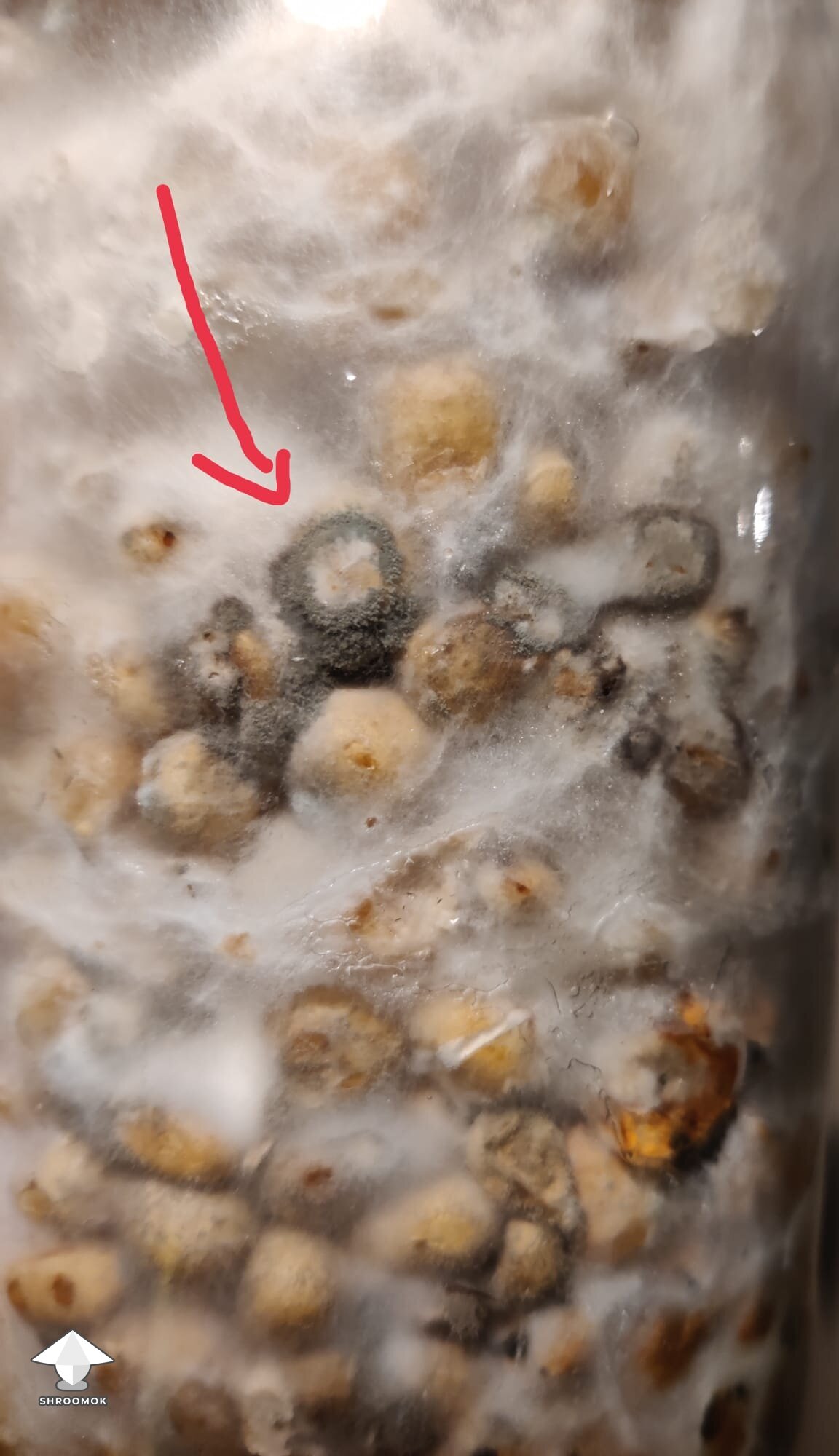
For the Reishi spawn(first 2 images), I thought it could be Trichoderma after reading this article (https://shroomok.com/en/wiki/Green_mold_contamination_aka_Trichoderma ). However, it does not have a similar green color, it remains the same gray even after a couple of days. It also seems to grow in distinct clusters apart from the Reishi mycelium.
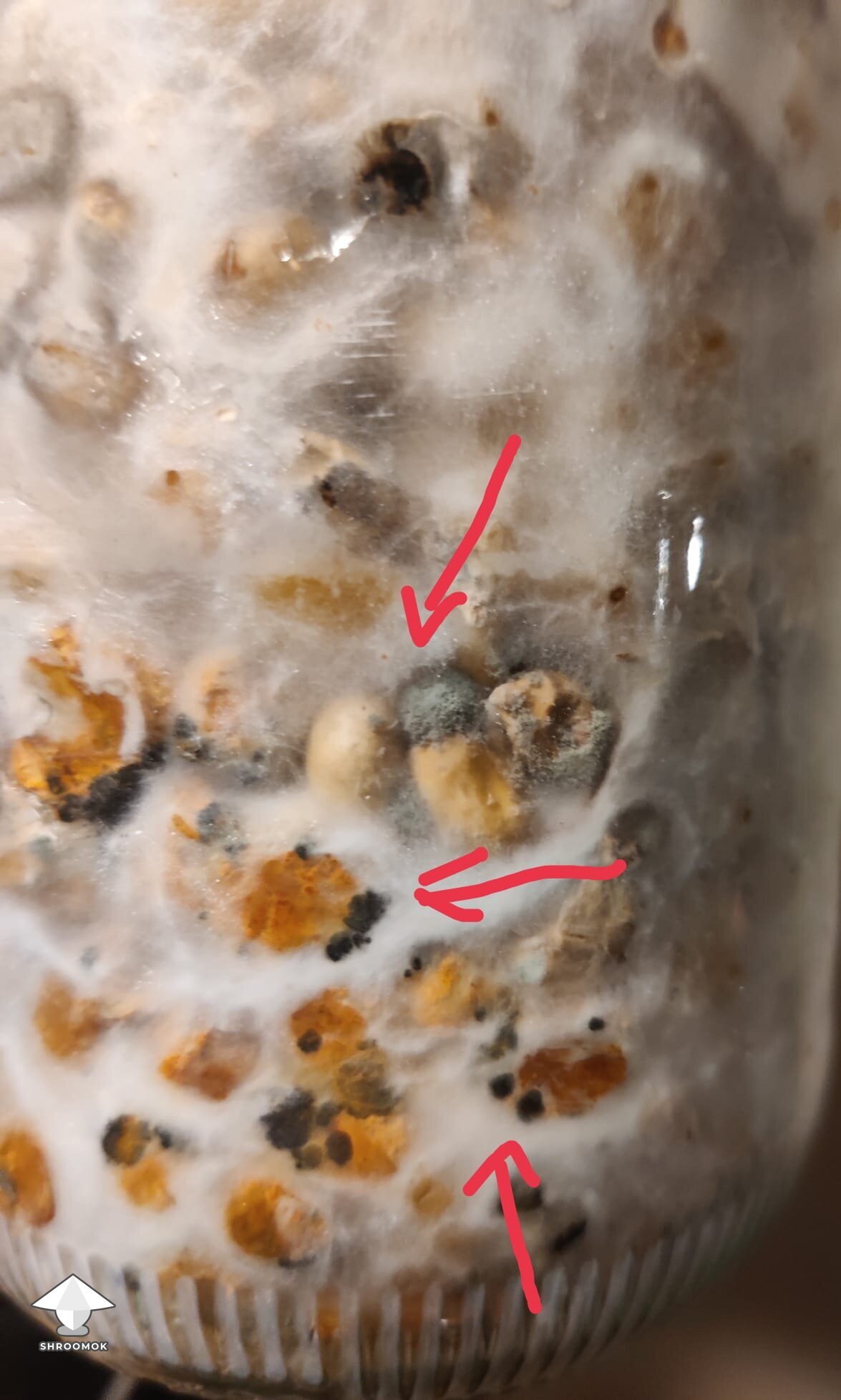
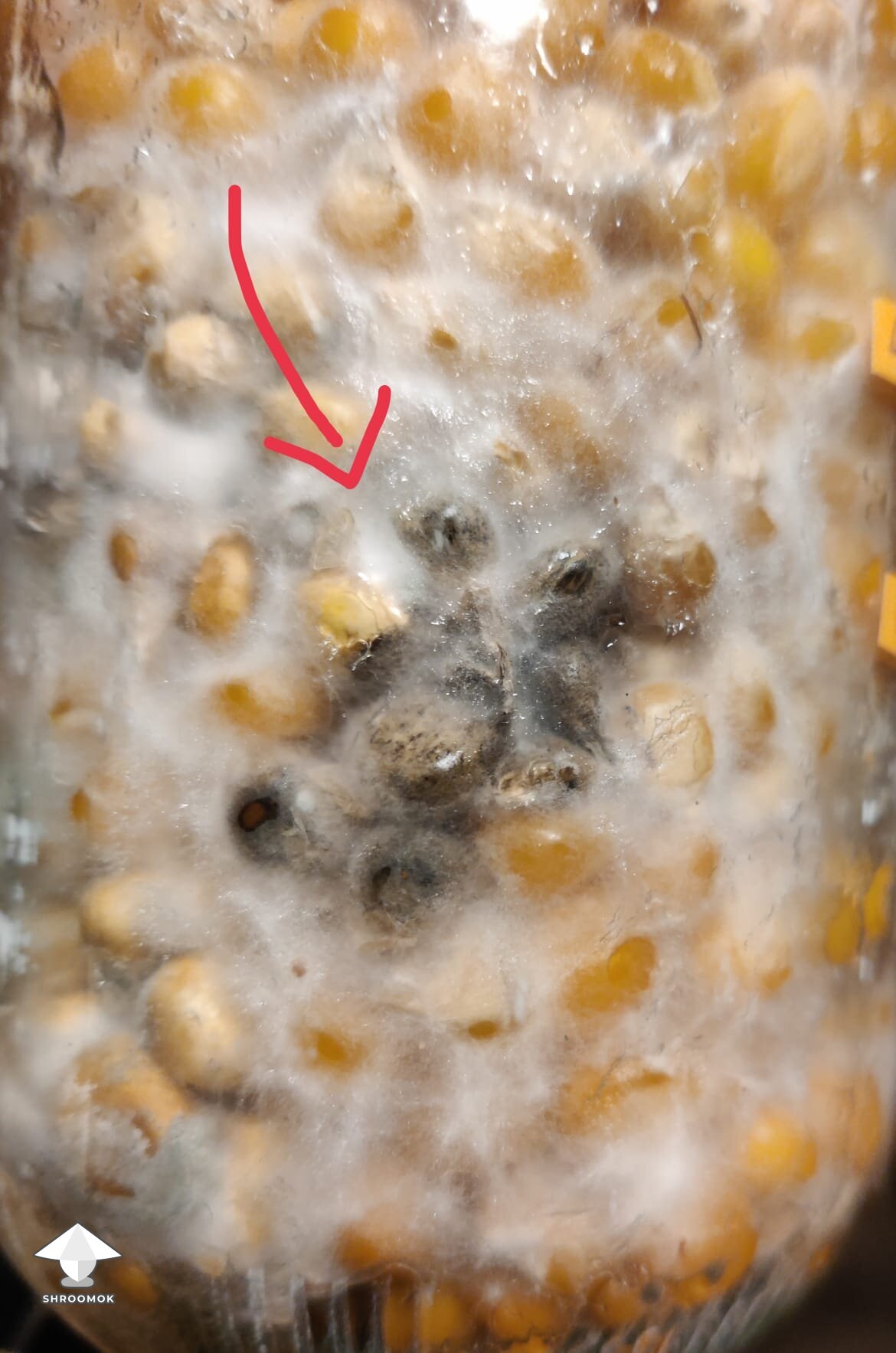
For the Lion’s Mane batch, I have spotted three “irregularities”: one that looks like Trichoderma(third image), something that is black and a little spotted around (fourth image), and then a black, more cloudy-looking growth(fifth).
I’m sure this spawn is unsalvageable, but does anyone have an idea of what this could be? Thank you for taking the time to read this and for any suggestions.
Attachments

Shroomok's choice on Amazon

Hello Ron!
You're right about your contaminated jars. Unfortunately, you can't save them. But there is a chance for the last one.
My 2 cents here.
The mold in your jars could also be Penicillium – it starts off bright white, similar to Trichoderma, but gradually turns green, blue-green, gray or even yellowish.
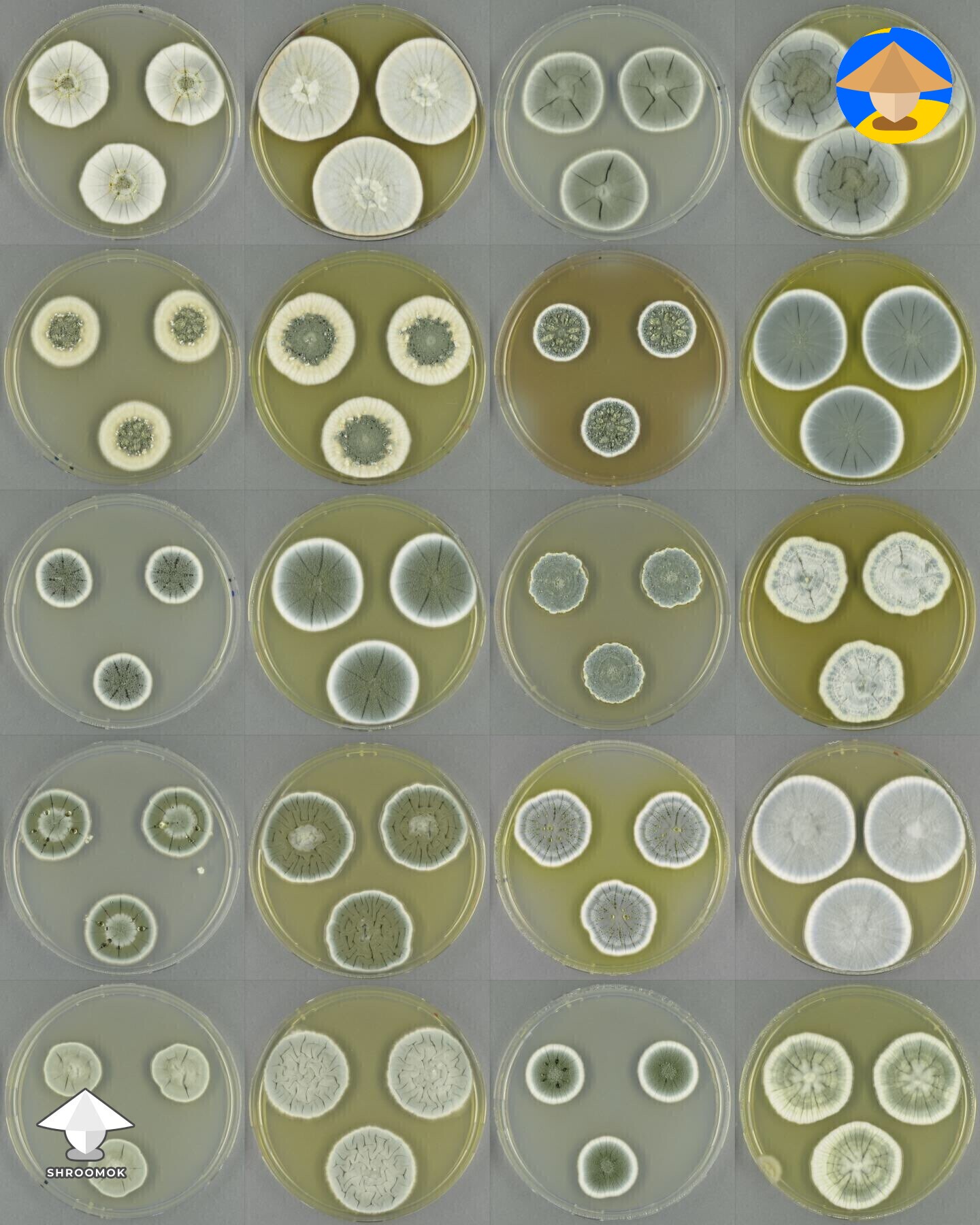
Dark gray and black areas may be Aspergillus. Their species have huge range of colors – not only green, but also blue-gray, gray, black, brown, yellow, orange, pink.
For reference – Aspergillus and Penicillium (only last 2 rows) samples on agar
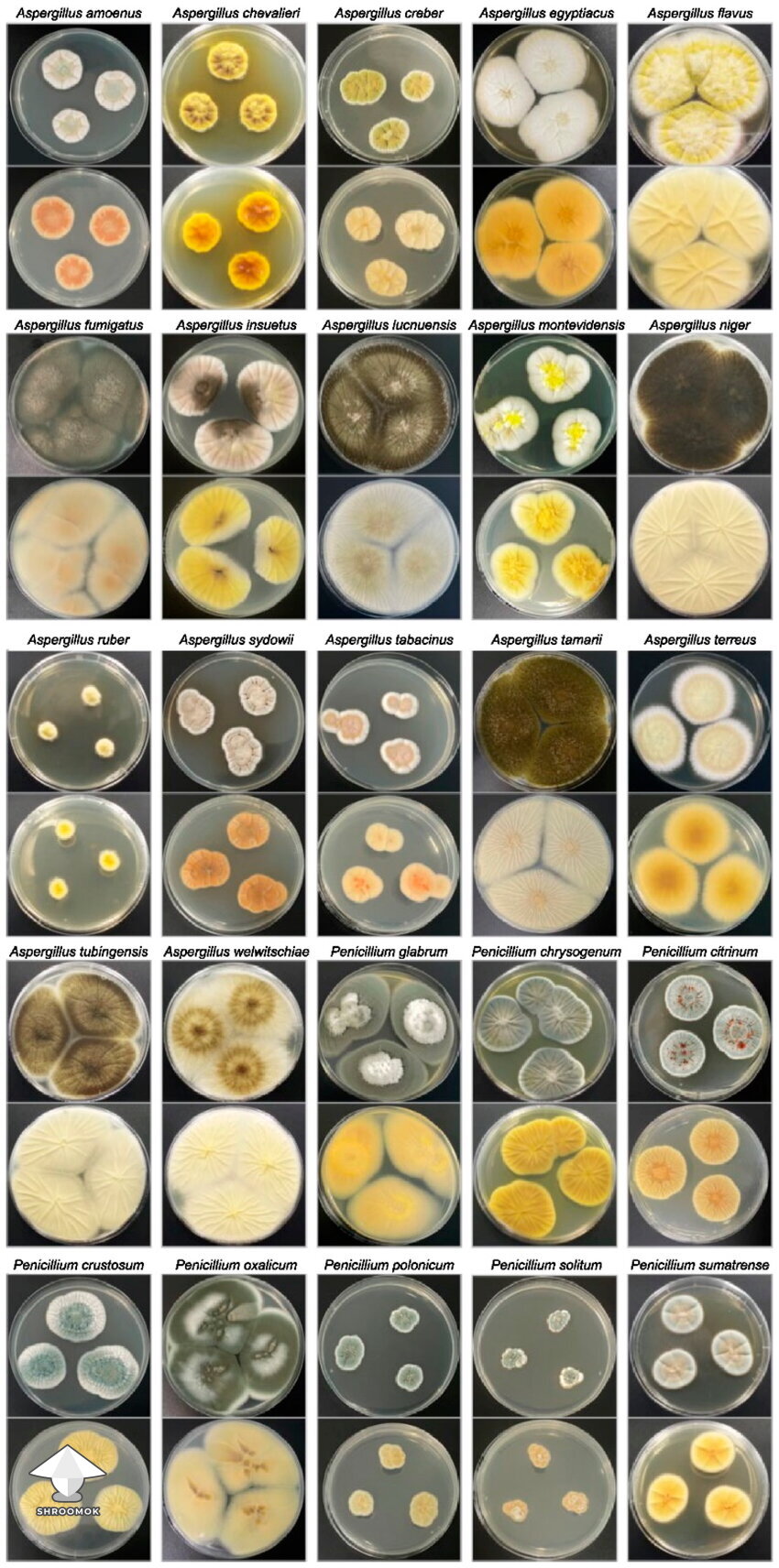
Or Cladosporium mold that also can be gray, black or dark green-gray. It is difficult to tell them apart by eye.
It also seems to grow in distinct clusters apart from the Reishi mycelium.
Yes, mold tries to occupy bald uncolonized grains. At the same time, mushroom mycelium constantly struggles to seal off the infected area around it. It's a real battle! Sometimes the mycelium wins, especially in the case of the strong and aggressive Reishi mycelium. Just like your last photo 5 – this could be a winner.
In my experience with Reishi, there was a small contaminated patch like yours, but Reishi mycelium literally ate contaminated area, so I'd give it a chance. Things went way harder with LM tho, 'cause it's a more gentle and slow creature.
Let's figure out what your contamination vector is ;-)
Any mold dies after grain sterilization in pressure cooker. At temperatures above 140-160 °F (or 60-70 °C) for more than 30 minutes, all mold spores are destroyed, but we sterilize grain in PC at much higher temps and for longer (we need it to destroy bacteria).
Thus, mold contam usually appears due to contaminated genetics, during the inoculation process, or enters from the air through the air filter (if you removed the jars from the sterilizer immediately after sterilization or if the air filter is not good enough or if you open the lid for inoculation).
Did you use liquid culture or spore syringe to inoculate the grain jars? Reishi and LM cultures are usually sold as LC.
Are you sure your genetics were contam-free? Did you test it on agar before inoculation?
What air filters do you use on the lids? Do you have an injection port?
Did you sterilize the grain jars on your own? If so, did you let them cool down right in the pressure cooker without opening it immediately after sterilization?
When did you notice mold in the jars? How much time had passed since inoculation?
Hope this will be useful for your future attempts :-)
Thanks for the valuable information. I was actually trying to multiply cultures growing on Master’s Mix. I sterilized the grains myself for roughly 2 hours in a pressure cooker. I used glass jars as containers for the grains and drilled a hole in the lid, then stuffed wool into the hole for air exchange (during sterilization this was covered with aluminum foil).
I think the contamination likely occurred during inoculation. I had to open the jars and did not use a SAB or a flow hood to prevent contaminants from entering.
The answer is simpler than I thought. Opening jars in the open air (w/o SAB or flow hood) for inoculation is extremely risky due to the high probability of airborne contamination. Now you know this for sure.
Have all your jars been contaminated? Or do you have a few healthy ones?
The grain looks good, there are no signs of bacterial contamination, which means sterilization was successful – I conclude this based on your info and what I see in your photos, but I didn't see your jars from the bottom and from all sides...
Stuffed wool (synthetic polyfill is better) as an air filter is good to use. But next time just make a separate hole for injection port, so that you don't need to open the jar and you don't need a SAB or flow hood. Just insert the syringe needle through the injection port, and that's it.
A few examples:
Injection port made of RTV silicone
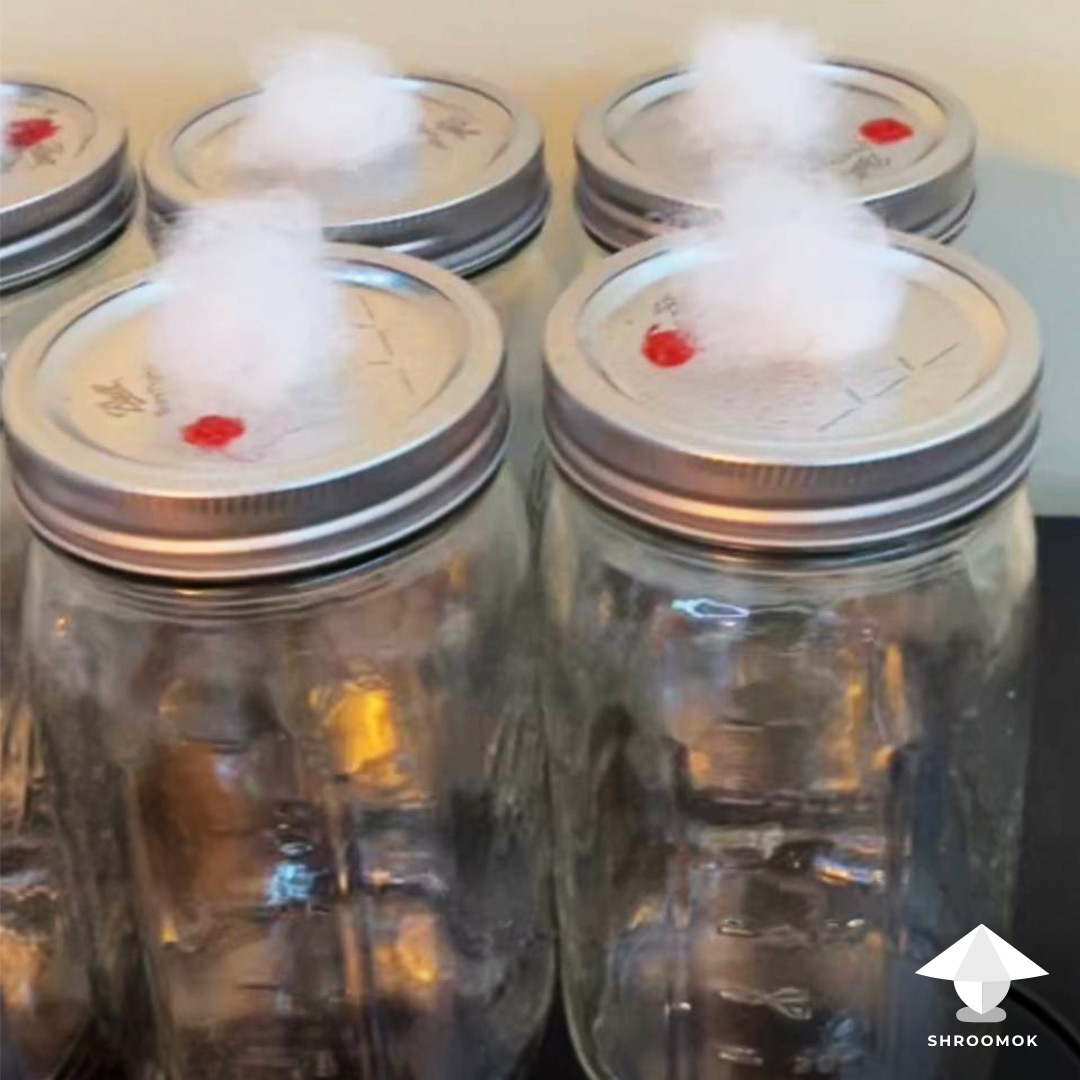
Jars for mushroom spawn - lid with inoculation port and polyfill air filter Injection port made of butyl rubber stopper
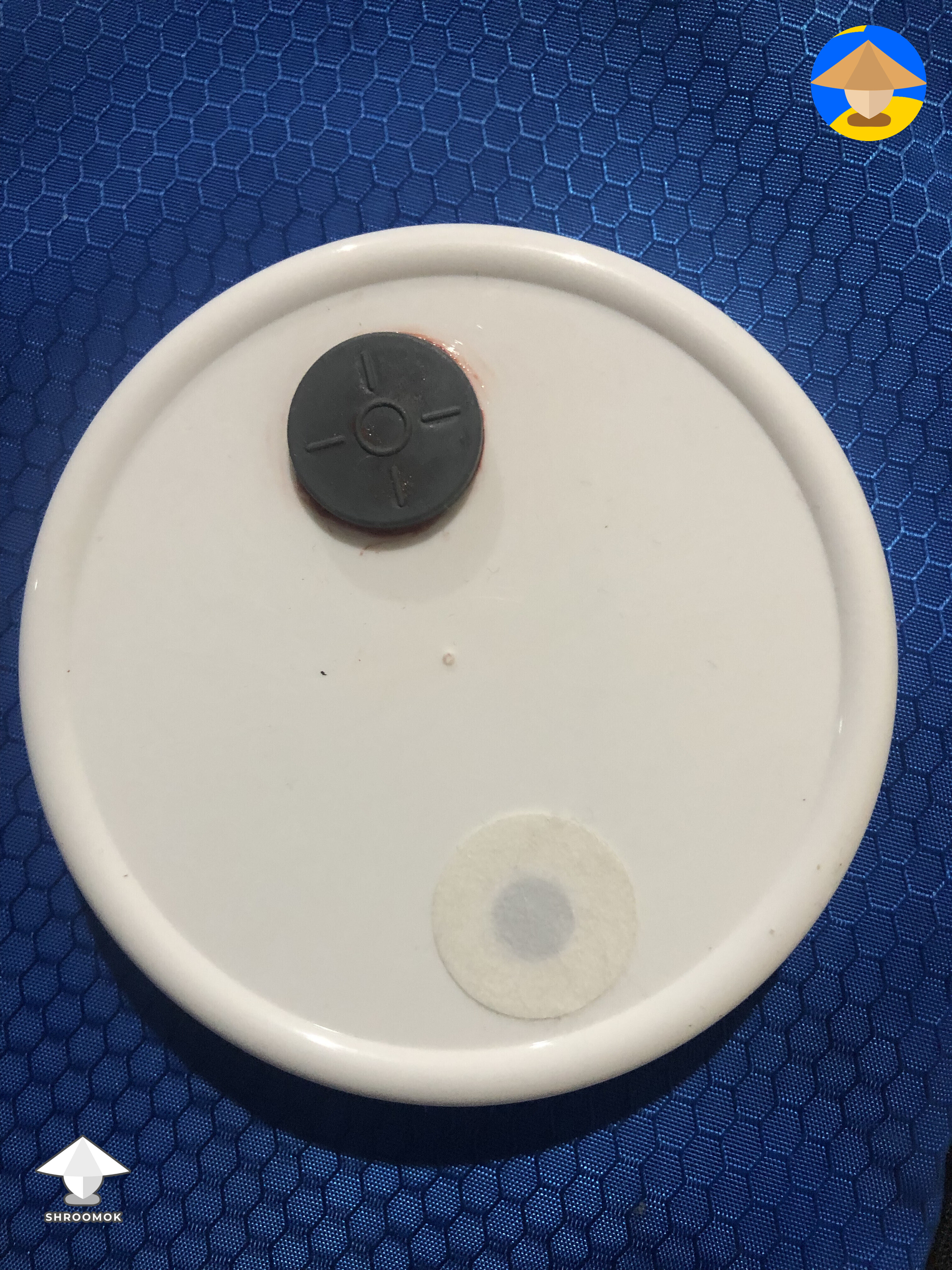
PP5 heat resistant plastic lid with synthetic air filter patch and injection port (butyl rubber stopper) Or 2-in1 – injection port + air filter made of bactericidal breathable patch
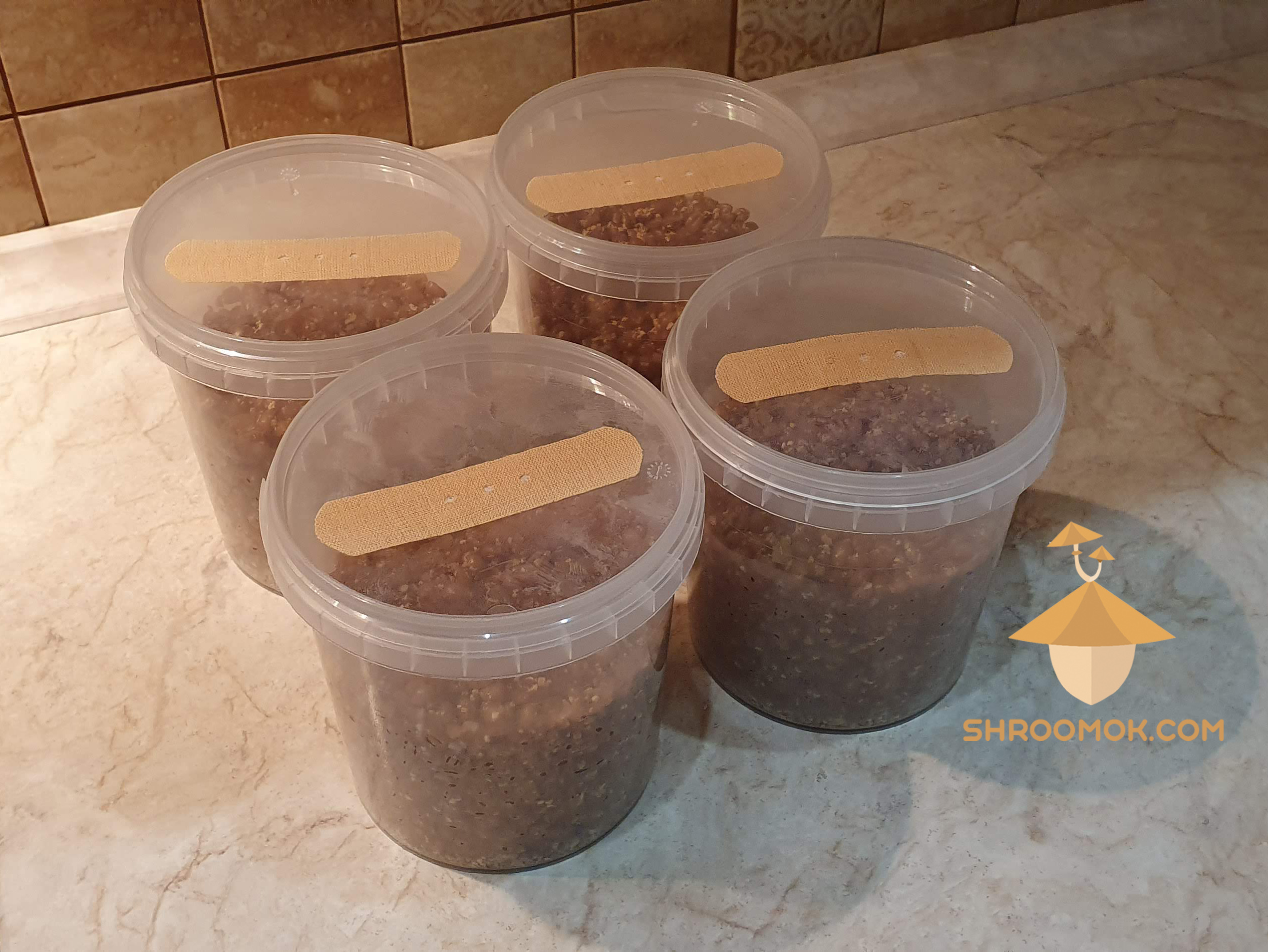
One hole for air filter and injection port covered with breathable bactericidal patch


You can find more details and examples in these guides: